

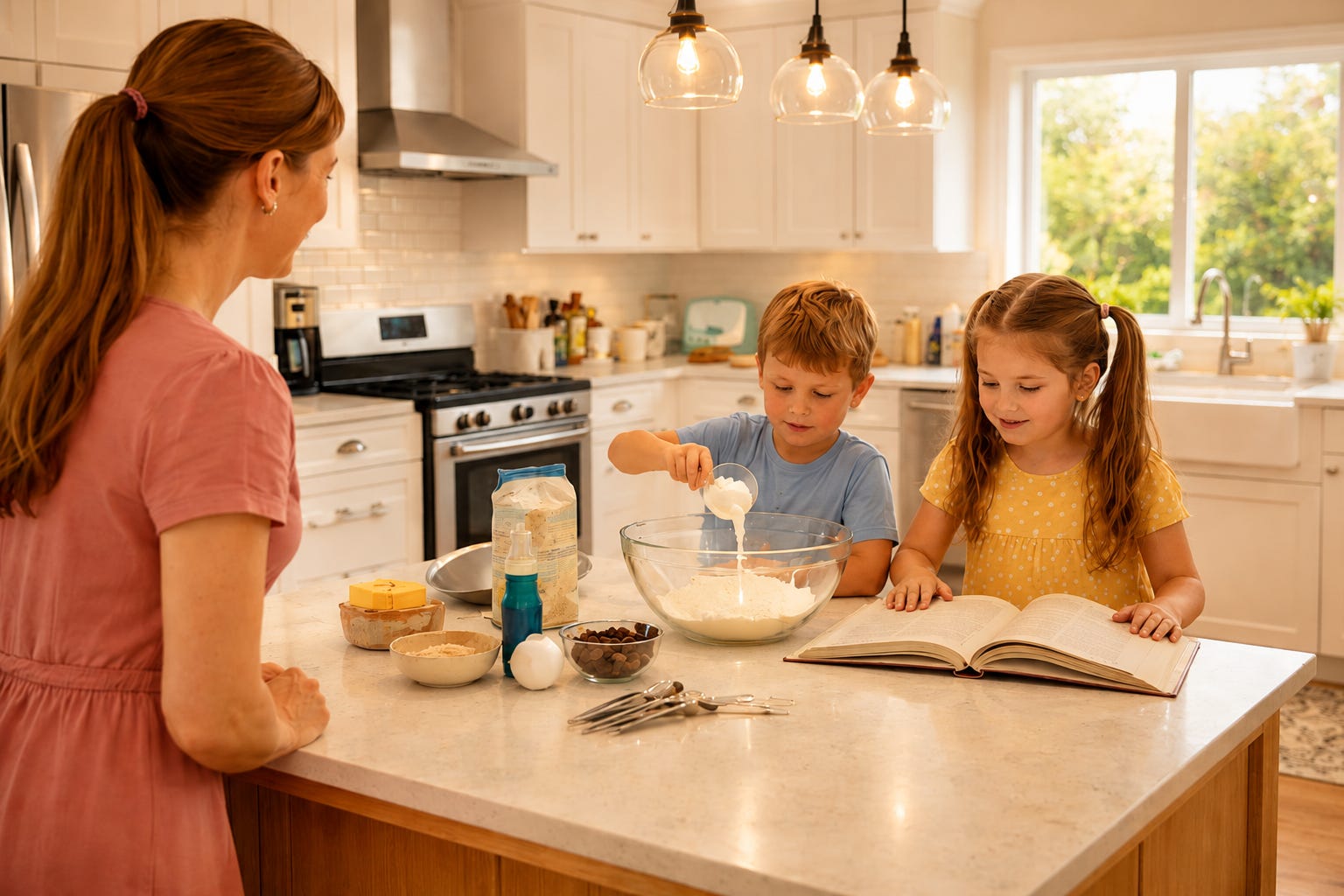
Is it possible that by keeping children out of the kitchen, we are also preventing them from learning essential life skills?
Last year, my son had a friend over every Tuesday after football practice. We had lunch together before taking the boys to school.
One day, I told them they needed to prepare their school snacks on their own. I asked them to take a few things from the fridge, gave them two bags, and let them figure out the rest.
What started as a way to take a small task off my plate quickly became something creative for them.
I listened as they debated which cheese was best and how much butter was “just right.” They passed ingredients back and forth and experimented with small changes to their sandwiches each week.
One day, the bag tore, and the sandwich landed on the floor. We all laughed.
I cherish these moments. My son is an only child, and experiences like this give him the chance to cooperate and have fun with someone his age.
Children learn a lot by participating in everyday tasks, and preparing food is one of the easiest places to start.
Here are three simple ways to involve children in meal preparation.
1. Plan and prepare one meal or recipe together
Invite your child to choose one recipe or even a full family meal once a week.
Look for ideas together in cookbooks or online. Write down the ingredients, go shopping together, and prepare the meal as a team.
This allows children to make decisions and to feel responsible for something important. They are not just helping. They are contributing to the family.
They also learn how the whole process works. Planning, shopping, preparing, and finally enjoying the meal together.
Make it as simple or as elaborate as you like.
2. Involve children in setting the table and cleaning up
Even very young children can help set the table.
Place everything they need within reach so they can access it easily. It may feel awkward at first, especially if they have never done it before. But after a little practice, it will become natural.
Younger children may even see it as a privilege to be trusted with this task.
I started a little late, and at first my son saw it as a burden.
“Why should I do it?” he asked.
He got used to it after a few days of practice.
Children can also participate in cleaning up after a meal. Just a few minutes of team work will leave the kitchen clean and ready for the next meal.
Keep your expectations realistic. If your three-year-old puts the salt on the wrong shelf, that’s what success looks like.
Make it enjoyable. Laugh, have fun, and they will probably want to keep helping.
To support this practice, you can read Fred the Frog Helps at the Picnic Table with your child.
In this story, everyone works together to prepare for the spring picnic. Fred is too small to reach the table at first, but after a few tries, he finds his own way to help and feels proud of his contribution.
3. Let children prepare something on their own
When I first asked the boys to prepare their snacks, I didn’t fully understand the importance of letting them make their own choices.
I’ve never seen myself as someone who needs to control what my son does. I’ve always been patient when he plays or draws independently, stepping in only when he asks for help.
But somehow I hadn’t applied the same approach to cooking. We sometimes made complicated desserts together, but I had never asked him to prepare something completely on his own.
Now we do this almost every day. For example, I showed him how to make rice and then let him take responsibility for it. He sets an alarm and calls me only if he needs help.
He can do so much more than I previously thought.
What Children Gain from Helping in the Kitchen
When children participate in meal preparation, they learn how to cook, a skill they will use throughout their lives.
But they gain much more than that. They practice making decisions and develop responsibility, independence, and confidence. They feel included.
They also begin to appreciate the effort behind everyday household tasks and want to help out.
Preparing food is a creative activity where children experiment with flavors and ideas. It may open the door to trying new foods and cuisines without any pressure.
At this point, you may have a concern, and it might be a big one.
Why would I want to add to my workload by involving my child?
Teaching, supervising, keeping them safe, and handling complaints along the way will probably not make things faster.
And I understand that.
But my point is not that involving your children will immediately make your work easier.
My point is that it might transform a task you are struggling with into an opportunity to share something meaningful with your child.
Instead of rushing through it alone, you may find yourself sharing a moment of connection. It may even be possible to have a little fun.
Do you think that might be worth exploring?
Explore the full library of articles, stories, and parenting resources here.

I like cooking with my son and showing him how to make my favorite recipes.
Lately I ask him to help, take things out of the fridge, put things away.
At first I thought these are little things that can't possibly make a difference. But they make my life easier and I also enjoy the company.