

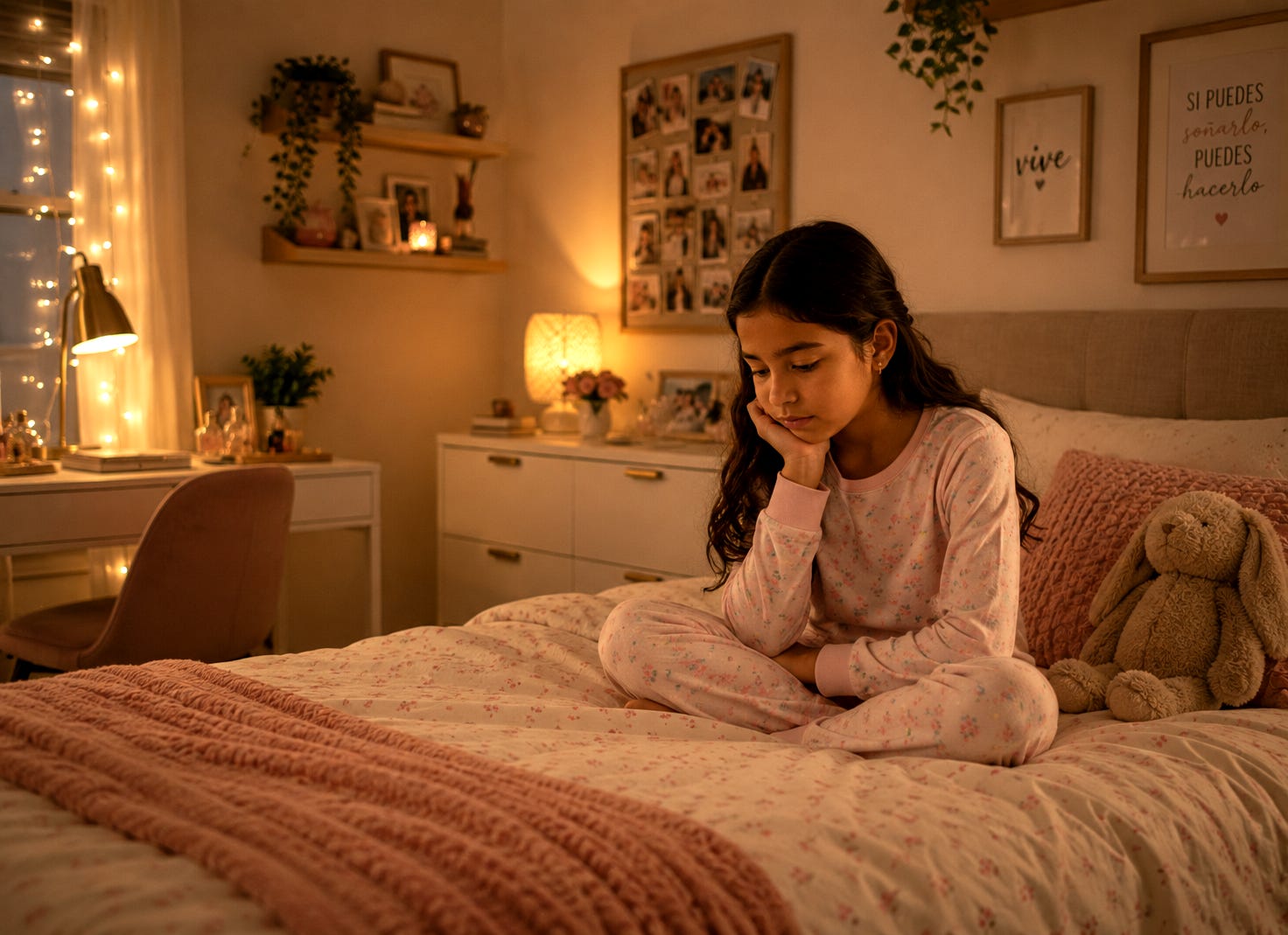
As a child, I never learned how to handle emotions.
My father never showed any emotion except anger.
I don’t think he ever admitted, even to himself, when he felt sadness, shame, or fear. Any difficult emotion quickly turned into anger or rage.
Although his actions showed that he loved us, he rarely expressed it through words.
Whenever I asked for advice about emotional struggles, he would say:
“You are very intelligent and perfectly capable of managing this.”
And that was it.
At the time, I thought he was supporting me. Now I can see that he didn’t have the answers himself. Encouragement was all he had to offer.
My mother was different.
She was affectionate and warm. But much of the time, she also seemed exhausted and disconnected from reality.
When I struggled emotionally, she often assumed I was too demanding in my relationships or somehow creating the conflict myself.
Very early on, I reached two conclusions:
Emotions are dangerous.
And no matter how much I struggle, I’m on my own.
Since emotions were a problem, the only solution I could imagine was not feeling them at all.
Some nights, I became overwhelmed by shame, fear, and despair. I felt certain my life would always be this way.
Sometimes it escalated into a full panic attack where I thought I couldn’t breathe.
I didn’t know how to handle any of it.
Over time, I discovered that I could create a feeling of safety and compassion inside myself, and that helped me fall asleep.
The next morning, I felt better.
The despair faded into the background, and I could function again.
Go back to school. Continue with everyday life as if nothing had happened.
Eventually, I developed a mantra:
“Everything is better after a night’s sleep.”
And that got me through childhood.
I believed only logic had value.
I saw my father as strong because he seemed guided by logic instead of emotion.
So I tried not to feel anything because I wanted to become strong like him.
Somehow, I completely missed the fact that anger is an emotion too.
I thought I had an anger management problem.
Everyone around me believed girls should be sweet, compliant, and agreeable.
They treated my normal childhood outbursts as a serious character flaw.
People said I was exactly like my father, and I believed them.
I became convinced I had an anger management problem, and that the solution was to completely stop feeling anger.
By the time I reached adulthood, I had already decided that I shouldn’t feel anything.
Whenever an emotion came up, I pushed it down. I distracted myself with sleep, books, or video games. Exactly like I did in childhood.
But emotions don’t just disappear.
The sadness turned into depression. The fear became chronic anxiety, while the anger kept building underneath, waiting to explode in moments that didn’t justify that level of intensity.
And shame kept coming back in powerful waves that felt almost unbearable.
I became trapped in a cycle of avoidance, explosion, and distraction.
Over time, I started avoiding anything that pushed me outside my comfort zone.
I inadvertently suppressed my ability to feel joy, gratitude, and connection.
My life became predictable and emotionally flat.
And ironically, I still didn’t feel safe, because I was constantly afraid of the difficult emotions waiting beneath the surface, ready to come out with the slightest provocation.
I thought avoiding emotions would make me strong.
But it had done the opposite.
It took me a long time to realize that emotions aren’t problems to avoid.
They are powerful messages that guide us to create the life we want.
Anger may show us where we need stronger limits.
Guilt may reveal that our actions no longer align with our values.
Depression may be telling us that we have outgrown old ways of living, and we are longing for something new.
Over the years, I’ve learned how to create safety even during overwhelming emotional experiences.
I’ve also created practical frameworks and step-by-step processes that help me decode the messages behind these emotions and use them to guide my actions going forward.
That’s what the Emotions Are Messages series will focus on.
You can explore the Emotions Are Messages series as well as the full library of articles, stories, and parenting resources here.

Very poignant, Debbie. I think your childhood like that of most other children...because most adults are not adept at handling their emotions. Well, they weren't in the past. Not so sure about now.
This mantra: “Everything is better after a night’s sleep" is one I think I've heard before. Isn't it amazing how children can use the smallest things to keep going? It's amazing that you took your experience and come away stronger for it. Bravo!
Oh, Debbie! All I wanted to do was hug little Debbie. It’s so hard having to figure things out by ourselves, especially when we are so young.
But I’m glad you found a way to deal with your emotions. Also happy and grateful that you decided to share with us!